Petra
Back to the canyon directory

Petra

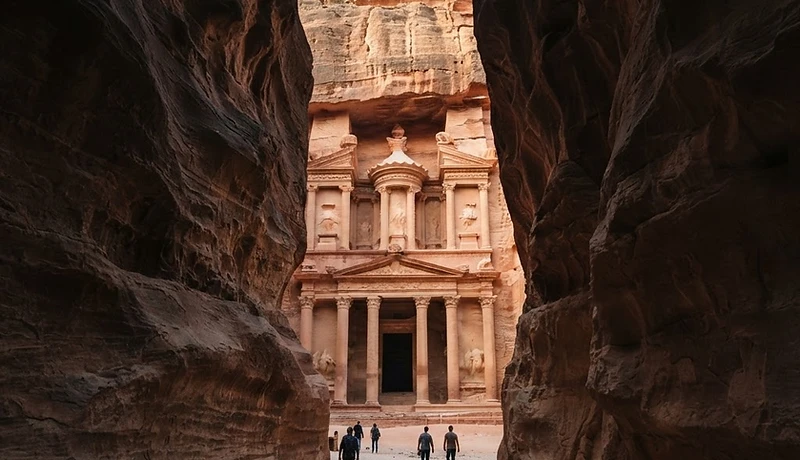
Walk through the Siq to the Treasury in the Nabataean capital, one of the New Seven Wonders of the World.

Ma’an GovernorateFull day
About Petra

A Nabataean city, visited on its own terms

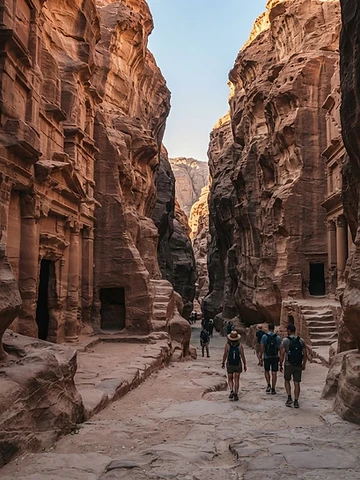
Look for the water channels cut into the walls of the Siq. The Nabataeans collected rain and stored it in cisterns to sustain a city in these dry mountains. Beyond the Treasury, the theatre and Royal Tombs show how closely daily life and funerary monuments shared this valley. For a longer walk, ask about the climb to the Monastery.

Nabataean heritage

Petra was the capital of the Nabataeans, a trading people whose caravans carried incense and spices between Arabia, Gaza and the Mediterranean. From roughly the 1st century BC into the 2nd century AD they cut a whole city into the rose sandstone: tombs, temples, a theatre, colonnaded streets, cisterns and a water system that made a desert city liveable.

The Siq and the Treasury

Most visits open the same way — on foot through the Siq, a canyon corridor a little over a kilometre long, its walls closing overhead before it releases you onto Al-Khazneh, the Treasury, carved into the cliff face opposite.

The main monuments

Beyond the Treasury the site runs for kilometres: the Street of Facades, the theatre, the Royal Tombs, the Colonnaded Street and Qasr al-Bint. How far you walk decides how much you see, and the order is agreed with you on the day.

The Monastery — optional

The Monastery (Ad Deir) is the largest facade at Petra, high above the site and reached by a long staircase cut into the rock. It is an optional climb: included only if you want it and the pace of your day allows.

Little Petra and Petra by Night — separate optional visits

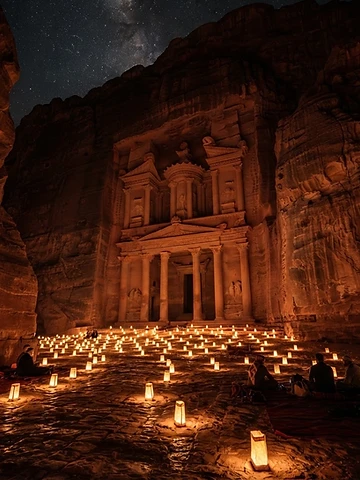
Little Petra is a Nabataean caravan station a few kilometres north, visited on its own. Petra by Night is an evening visit, separately ticketed, with its own dates and format. Neither forms part of a daytime visit unless you arrange it.

The Experience

Nothing quite prepares you for the moment the Siq narrows and the Treasury reveals itself at the end of the corridor of stone. Petra is more than a single facade — it is an entire civilization carved into rose-colored sandstone, with tombs, temples, and monuments spread across a vast site. We guide you through the iconic highlights and the quieter corners most visitors miss, timing the day to avoid the worst of the crowds and the heat.

Photo Story

Safety & Gear

  • Extensive walking; comfortable shoes essential.
  • Sun protection critical; little shade on main routes.

Gear Requirements

  • Walking shoes
  • Sun hat & sunscreen
  • Water bottle
  • Light layers
Petra arrangements
  • Petra can be visited as a stand-alone day; route, guiding, timing and entrance arrangements are confirmed before booking.
  • Transfers, meals and hotel nights appear in your written quotation only where they are included.
  • Little Petra and Petra by Night are separate optional visits with their own dates and format, not part of a daytime visit.
Services in this area
Book This Experience
Petra and its surroundings

Options around the main circuit

Petra does not end at the Treasury. These are separate options in the same region, with their own access and their own arrangements — not all of them inside the main site, and not all of them achievable in one day.

Separate archaeological site

Little Petra

Siq al-Barid — a small Nabataean caravan station a few kilometres north of Petra, with its own rock-cut facades, cisterns and painted dining hall. Visited separately from the main site.

Little Petra
Optional evening visit

Petra by Night

A separately ticketed evening visit with its own dates and format. Arranged with you when you want it; never assumed as part of a daytime visit.

Petra by Night
Sunset viewpoint

Jabal Qaroun (Karon)

A viewpoint above Wadi Araba on the Bayda–Farsh side of the Petra region, used as a sunset spot. Access, meeting point, return transport and timing are confirmed for your date and the conditions, respecting park closing and access rules — nothing is planned around being inside a closed park or walking back in the dark.

Official Qaroun trail
Demanding hike — a different mountain

Jabal Haroun (Mount Aaron)

Not to be confused with Qaroun: a separate mountain on the other side of the site, reached by a long, demanding hike with a steep final climb to the shrine traditionally associated with Aaron. It needs an early start, fitness and arrangements agreed in advance.

A separate permit from the Petra Development and Tourism Region Authority is required. We confirm the permit and current access arrangements before confirming this visit.

Official Haroun trail

Official trail information for the two mountains is published by Visit Petra. Anything you choose is arranged as its own Petra enquiry — separate from a standard one-day visit.

Ask about these separately
One day, one place

A stand-alone day at Petra

A full day at Petra with your own guide, start to finish — entrance, guiding and timing arranged for your group, and nothing else attached to it. Tell us where you are starting from, when you want to go, how many of you there are and how much walking you want, and we answer with the arrangements in writing.

No fixed schedule is published here, and nothing is included automatically. What the day covers — guiding, entrance, transport, meals — is set out in your written reply.

  • Starting location

    Where you will be travelling from that morning.

  • Dates

    The day or days you have in mind.

  • Group size

    Adults and children, so the day is planned for the whole group.

  • Walking preferences

    A shorter route through the main monuments, or a longer day with the Monastery climb.

Enquire: one day at Petra
Before you visit

Practical notes for Petra

A visit to Petra is a day on foot through a large archaeological site. These notes explain how the route is planned, what the pace asks of you, and what is arranged only when your quotation says so.

Plan your Petra visit

  • The classic approach enters through the Siq and arrives at the Treasury, then continues along the Street of Facades, the theatre, the colonnaded street and Qasr al-Bint as time and route allow.
  • The Monastery sits higher in the site and asks for a long stair climb. It is an optional addition when the day and the group suit it — never automatic.
  • Pace and stops are agreed with you around your arrival, the conditions on the day and the time you have available.

Choose your pace

  • A shorter visit stays with the Siq, the Treasury and the monuments close by. A fuller day walks deeper into the site.
  • Longer routes need more time on foot and a reasonable level of fitness; the ground is rock, stone steps and open track.
  • Tell us about walking distances, steps, heat tolerance and any mobility needs before we quote, so the plan matches the group.
  • Some parts of Petra involve uneven ground and steps, so we do not promise universal accessibility — access depends on the route chosen.

What to bring

  • Sturdy walking shoes with grip for rock and worn stone.
  • Plenty of water and sun protection — shade is limited on the open routes.
  • Layers for cool mornings and evenings, warmer outside the summer months.
  • Route, access and weather are confirmed with you before departure.

Tickets and arrangements

  • Entrance, guiding, transfers, meals and hotel appear in your written quotation only where they are included.
  • Petra by Night is a separate ticketed evening experience with its own schedule, subject to availability. It is not part of ordinary daytime entry or a Jordan Pass, and it is not included unless your quote says so.

Official visitor information: visitpetra.jo — trails · visitpetra.jo — fees